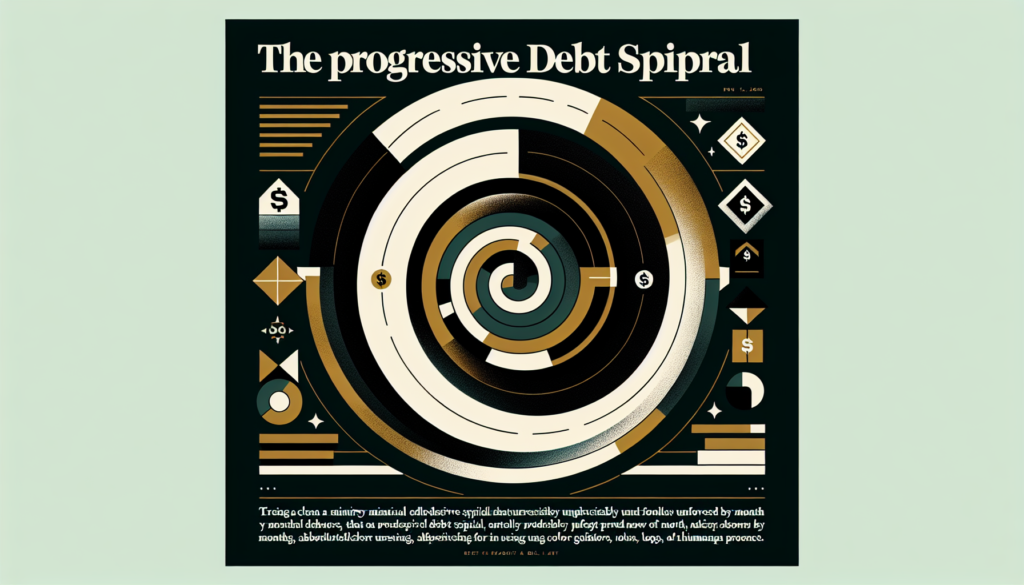

There’s a version of your life that credit cards can buy you. Nice restaurants, weekend trips, new clothes every season, the latest phone before your old one even slows down. I lived that version for a long time. And for a long time, I told myself it was fine. Everyone does this, right? That’s what lifestyle debt does to you — it feels completely normal until the day it doesn’t.
This isn’t a lecture. I’m not going to tell you what you already know about interest rates or financial responsibility. What I want to do is be honest about how it actually happens, how it feels from the inside, and why it’s so much harder to stop than anyone admits.
It Started Small and Felt Completely Reasonable
The first time I put something on a credit card I couldn’t technically afford, it was a flight. A friend was getting married abroad, and I didn’t have the cash sitting there. So I charged it. I told myself I’d pay it off next month. That’s the line almost everyone starts with.
Next month came, and I paid part of it. The rest rolled over. Then there was a birthday dinner. Then a coat I “needed” for winter. Then a weekend away because I was stressed and deserved a break. Each individual decision made total sense in the moment. That’s the mechanics of living beyond your means — it’s never one big reckless choice. It’s a hundred small ones that each feel justified.
Within about 18 months, I had quietly built up a balance that would have horrified the version of me who took out that first card. But I didn’t feel horrified. I felt… fine. Because nothing had visibly broken yet.
The Dopamine Loop Nobody Talks About
Here’s the part that took me years to understand. Spending money — especially on experiences and things that feel like upgrades to your life — triggers a genuine dopamine response. Your brain rewards you for it. The anticipation of a purchase, the moment of buying, the brief glow of having something new. It’s a real chemical hit.
And here’s where it starts to mirror something darker. Problem gambling researchers talk about a loop: anticipation, action, reward, comedown, repeat. The key feature of that loop is that the reward shrinks over time. You need a bigger bet, a bigger purchase, a bigger experience to get the same feeling.
A debt funded lifestyle works almost identically. The first fancy dinner out felt special. After six months of charging fancy dinners, it just felt like Tuesday. So you’d book a trip. Then a better trip. The baseline kept creeping up, and the credit card made it frictionless. There was no natural stopping point because there was no moment where you ran out of money. You just ran out of credit — and by then, I had several cards.
The Signs I Ignored
- Minimum payments started to feel like “handling it” — I told myself I was managing my debt because I never missed a payment. I wasn’t managing it. I was treading water.
- I avoided looking at the full balance — I knew the monthly payment. I didn’t want to know the total number. That distance was intentional.
- Spending felt like stress relief — Bad week at work? Book something. Anxious? Buy something. The card was my coping mechanism.
- I compared myself outward, not inward — My friends seemed to live this way too. Nobody talked about money honestly, so I assumed everyone was fine. Some of them weren’t.
What a Credit Card Lifestyle Actually Costs
Let me get concrete for a second, because the numbers matter even if they’re uncomfortable.
If you carry £5,000 on a credit card at a typical 22% APR and you only make minimum payments, you’ll be paying it off for well over a decade. The interest alone will cost you more than the original balance. That dinner, that trip, that coat — you’re still paying for it years after you’ve forgotten about it.
But beyond the financial maths, there’s a cost that doesn’t show up on a statement. A credit card lifestyle puts a low-level hum of anxiety into your life that doesn’t go away. You start making decisions based on fear rather than actual choice. You can’t leave a job you hate because you need the salary to service the debt. You can’t take a risk on something you actually want because you have no financial cushion. The debt doesn’t just cost money. It costs options.
The Hidden Psychological Tax
Researchers who study financial stress have found that carrying debt occupies mental bandwidth in a way that’s genuinely measurable. It’s called the cognitive load of debt — and what it means in plain English is that a part of your brain is always running a background calculation about money. That’s exhausting. And the cruel irony is that when you’re exhausted and stressed, you’re more likely to spend impulsively to feel better, which adds to the debt, which adds to the stress.
It’s a loop. And unlike the dopamine loop, this one doesn’t even feel good.
The Moment It Stopped Being Abstract
For me, the wake-up moment wasn’t dramatic. There was no final straw or catastrophic event. I sat down one Sunday to sort through some paperwork and I actually, for the first time in years, wrote down every balance on every card. The total number sat on the page and I just looked at it for a while.
It wasn’t catastrophic debt by some people’s standards. But it represented years of living beyond my means, years of funding a lifestyle I hadn’t actually earned yet, years of paying interest on things I no longer owned or remembered. It looked, written down, like a long history of telling myself small comfortable lies.
The thing about lifestyle debt is that it doesn’t feel like a problem when you’re in it. You’re not struggling to eat. Nobody knows. You go to the same places, wear the same things, seem totally fine. The damage is invisible until you look directly at it.
What Paying It Off Actually Looked Like
I’m not going to pretend I found some clever hack or followed a perfect system. Paying it off was slow and boring and required me to actually reduce my lifestyle to something that matched my income. That part was hard — not because the lifestyle changes were dramatic, but because I had to sit with the discomfort that the spending had been numbing.
A few things that genuinely helped:
- Stopping the bleed first — Before paying anything extra, I stopped adding to the balance. That sounds obvious. It wasn’t easy.
- Making the debt visible — I kept a running total somewhere I’d see it. Debt thrives in the dark. Seeing it regularly made it real.
- Understanding my triggers — I wasn’t just spending randomly. I was spending when I was stressed, bored, or seeking reward after something difficult. Recognising that pattern didn’t fix it overnight, but it created a pause.
- Finding cheaper versions of the same hit — Not no pleasure, just different pleasure. The dopamine loop is real. You don’t rewire it by removing all reward. You redirect it.
- Talking about it — Shame keeps debt secret. Keeping it secret makes it worse. Telling even one person made it feel less like a moral failure and more like a practical problem to solve.
The Honest Truth About Debt-Funded Lifestyles
The culture around spending makes lifestyle debt incredibly easy to fall into. Buy now pay later is literally built into the checkout process. Social media shows you a constant reel of experiences and things worth having. Credit is marketed as freedom. None of that is accidental.
And I don’t think the people who end up in this situation are foolish or weak. The system is genuinely set up to make this feel normal and manageable right up until it isn’t. The psychology that drives a debt funded lifestyle is the same psychology that makes other compulsive loops so sticky — reward, repetition, escalation, avoidance.
Understanding that didn’t clear my debt. But it did help me stop being so hard on myself about how I got there, which made it easier to actually do something about it.
Final Thoughts
If any of this sounds familiar, I’m not going to tell you what to do. But I will say that the thing I wish I’d done sooner was look directly at the number. Not the monthly payment. The total. The real cost of the lifestyle I was borrowing to fund.
Lifestyle debt is quiet and socially acceptable and genuinely easy to normalise. That’s what makes it so effective at sticking around. The first step out of it isn’t a budgeting spreadsheet or a debt repayment calculator — it’s just deciding to stop pretending it isn’t there.
That part, at least, is free.