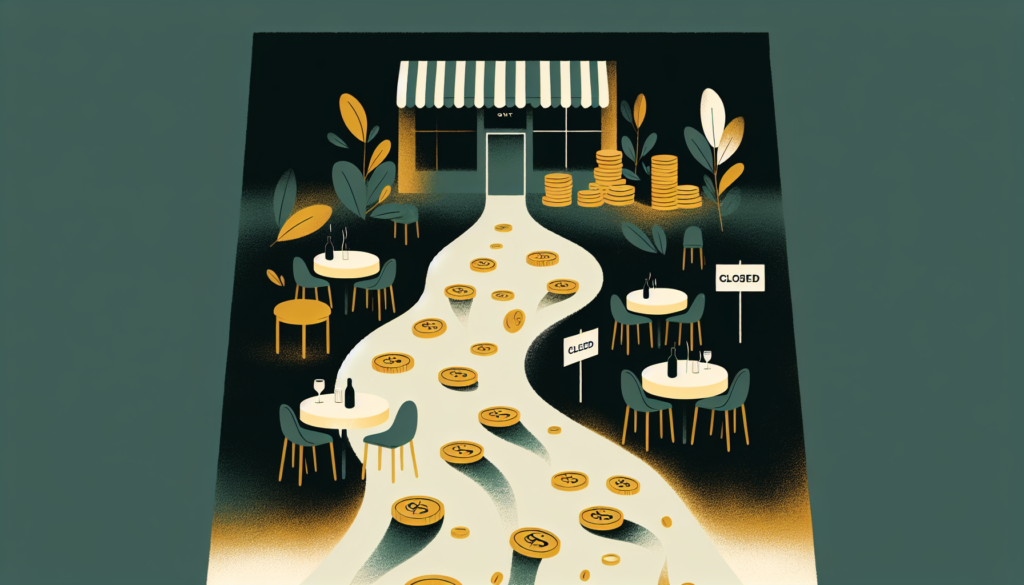
A few years ago, a friend of mine opened a restaurant. It was a great idea, a brilliant location, and honestly the food was fantastic. Eighteen months later, the doors were shut and he was left counting the losses. From the outside, it looked like bad luck. But when we sat down and went through the numbers together, the real story was something far more predictable — and far more avoidable. It was a classic case of restaurant failure cash flow problems hiding behind the illusion of a busy dining room.
That experience taught me more about small business finances than any book ever did. And the more I looked at it, the more it reminded me of something you see in casinos — the house edge. The idea that the odds are quietly stacked against you, not because you’re doing anything wrong, but because the structure of the game itself makes it hard to win without the right resources going in.
Why Restaurants Fail More Often Than People Think
There’s a reason the restaurant industry has a reputation for being brutal. You’ve probably heard the stat that most restaurants fail within the first year. The actual numbers vary depending on the study, but the message is consistent — why restaurants fail is rarely about the food. It’s almost always about money, and specifically, about cash flow.
My friend’s restaurant looked busy. Weekend bookings were full. People were leaving happy. But looking busy and being financially healthy are two very different things. The problem wasn’t revenue — it was the gap between when money went out and when money came in. That gap is where small businesses go to die.
The House Edge Concept and What It Has to Do With Your Business
Here’s the casino analogy I keep coming back to. In gambling, the house edge means that no matter how well you play, the structure of the game gives the house a statistical advantage over time. You might win in the short term, but the longer you play without a big enough bankroll to absorb the swings, the more likely you are to run out of chips before the odds turn in your favour.
Running an undercapitalised restaurant works the same way. The “house” in this case is a combination of:
- Fixed costs that hit you every month whether you’re open or not — rent, insurance, loan repayments, staff on salary
- Seasonal slowdowns that reduce income but don’t reduce your bills
- Delayed payments from events or corporate accounts that leave you short in the meantime
- Unexpected costs like equipment breakdowns, compliance issues, or a bad week of food wastage
Each of these things on their own is manageable. Together, they create a constant drain on cash reserves. If you don’t have enough capital to absorb those swings, you’re out of the game — even if your fundamentals are actually solid.
The Specific Cash Flow Problems That Killed the Restaurant
When I went through my friend’s books, the small business cash flow problems were painfully clear in hindsight. Here’s what was actually happening:
1. Revenue Was Inconsistent But Costs Were Not
Thursday to Sunday, the place was humming. Monday to Wednesday, it was quiet. But the weekly wage bill, the rent, and the supplier invoices didn’t care about that. The slow days weren’t just lost revenue — they were cash going out with very little coming back in. Over weeks and months, that pattern slowly drained the reserves.
2. Suppliers Had to Be Paid Before Customers Paid
Fresh ingredients had to be bought before the meals could be sold. Some suppliers wanted payment within 7 days. Customers paid at the end of their meal, sure — but the margin on each dish, after labour and overheads, was thin. There was almost no buffer between costs and income.
3. The Launch Period Was Massively Underestimated
The first three months were slower than expected. This is incredibly common — most new restaurants take time to build a regular customer base. But the business plan had assumed near-full capacity almost immediately. That optimism, without a cash buffer to back it up, left the business behind from day one and it never fully caught up.
4. One Bad Month Almost Finished Everything
In month nine, a water leak forced the restaurant to close for two weeks. Loss of revenue, plus unexpected repair costs, pushed the cash position into the red. They managed to survive it, but only by taking on extra debt — which increased the fixed costs going forward and made recovery even harder.
What the Numbers Were Really Saying
One of the biggest business cash flow lessons from this experience is the difference between profit on paper and actual cash in the bank. The restaurant was, on some months, technically profitable. But profit is an accounting concept. Cash flow is reality.
You can be profitable and still run out of cash. That sounds counterintuitive but it happens all the time. If your expenses are due before your income arrives, or if you’ve got money tied up in stock or outstanding invoices, the bank balance doesn’t reflect the profit figure. And it’s the bank balance that determines whether you can pay your staff on Friday.
A simple cash flow forecast — even a rough one on a spreadsheet — would have shown the warning signs months earlier. Not because it would have fixed the problems, but because it would have created time to make decisions. Time to negotiate better payment terms with suppliers. Time to apply for a small business loan before things got desperate. Time to cut costs in areas that weren’t essential.
The Lessons That Apply to Any Small Business
This story isn’t unique to restaurants. The same patterns show up in retail, trades, creative agencies, and service businesses. The specifics change but the underlying problem is the same — cash runs out before the business gets the chance to become sustainable. Here’s what I took away from the whole experience:
- Start with more capital than you think you need. Almost every business takes longer to become profitable than the original plan suggests. Build that delay into your funding from the start.
- Know your cash flow, not just your profit. Track when money actually comes in and goes out — not just whether the revenue covers the costs in theory.
- Negotiate payment terms early. If you can push supplier payments out to 30 days while collecting from customers quickly, you create a buffer that gives you breathing room.
- Build a cash reserve for the unexpected. Equipment fails. Staff leave. A bad week happens. If those events can threaten the whole business, the business is too fragile.
- Get help before you’re desperate. Banks and lenders are far more willing to help a business that’s managing a short-term gap than one that’s already in crisis mode.
- Separate your business and personal finances completely. Mixing the two makes it almost impossible to see what’s actually happening in the business.
Could It Have Been Saved?
Honestly, probably yes — if the cash flow issues had been spotted and addressed about six months earlier. The business had genuine potential. The location was good, repeat customers were coming back, and the reviews were solid. But by the time my friend realised what was happening financially, the options had narrowed to a point where none of them were good enough.
That’s the cruelest part of restaurant failure cash flow situations. The business itself might be worth saving, but if you wait until you’re out of cash to look for a solution, the solution rarely arrives in time.
The casino never worries about short-term swings because it has enough capital to outlast them. Small businesses rarely have that same cushion — which is why understanding your cash position isn’t just useful financial housekeeping. It’s survival.
Final Thoughts
My friend moved on and eventually started another business — this time with a much clearer understanding of how cash flow actually works. He’ll tell you the restaurant failure was the most expensive education he ever got, but also the most valuable.
If you’re running a small business or thinking about starting one, learn from his experience rather than repeating it. Keep a close eye on your cash position. Plan for the slow periods. Build in more buffer than you think you’ll need. And never confuse a full dining room with a healthy business — because as we learned the hard way, those two things are not the same thing at all.